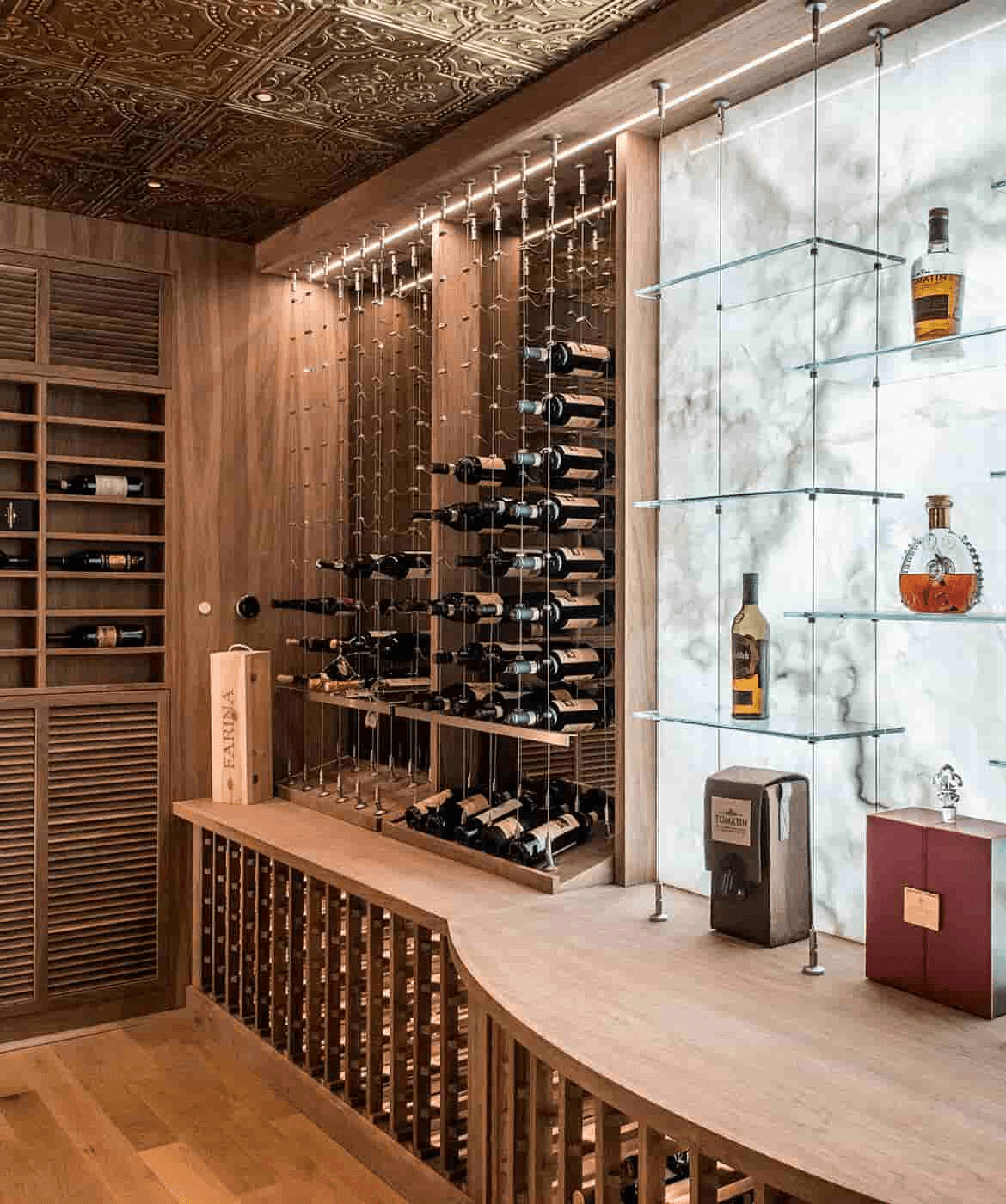
Deciding between wall-mounted vs. freestanding wine racks usually comes down to one old rule of thumb, and it is wrong. The common advice says freestanding racks are for serious collections and wall-mounted racks are only for showing off a few bottles. That may be true of a small decorative rack. It is not true of a full cable wine wall, which mounts to the wall and still stores a large collection. So the decision has less to do with capacity and more to do with three things: whether you own the wall, how you want the display to look, and how long you plan to keep it. This guide walks through the honest trade-offs.
Wall-Mounted vs. Freestanding Wine Racks: What Is the Difference?
The difference is simple: a freestanding rack sits on the floor and can be moved, while a wall-mounted rack fixes to the wall and turns your collection into a vertical display. Each format changes how much space you use, how the wine looks, and how much you can store.
-
Freestanding wine racks stand on the floor or a counter. They need no installation, hold themselves up, and can be rearranged or relocated.
-
Wall-mounted wine racks attach to the wall. They free up floor space, keep bottles at eye level, and, in the case of a cable wine wall, can run floor to ceiling for serious capacity.
That last point is the one most comparisons miss, so it is worth settling first.
Is It True That Wall-Mounted Racks Only Hold a Few Bottles?
No. That is only true of small decorative racks, not of a full wall-mounted cable system. The confusion comes from lumping two very different products together:
-
A small decorative rack holds a handful of bottles and is meant as an accent piece.
-
A cable wine wall suspends bottles on high-tension stainless-steel cables, spans floor to ceiling, and stores a large collection on almost no floor space.
This is the heart of the wall-mounted vs. freestanding debate. If you picture a four-bottle rack screwed to the kitchen wall, then yes, freestanding wins on capacity. But a purpose-built wine wall is a different product. Because it is built to order and scales section by section, it sizes to the wall you have and grows as your collection grows. A narrow strip of wall serves as storage for a large collection, with every label facing outward. The exact capacity depends on the height, width, and depth of your wall and the spacing you choose. You can see the range of layouts in the Cable Wine Systems gallery.
So capacity is not the deciding factor. The real questions are about ownership, space, look, and permanence.
How Do Wall-Mounted and Freestanding Wine Racks Compare?
Here is the side-by-side. Cost notes reflect typical US context.
| Factor | Freestanding Wine Rack | Wall-Mounted Cable Wine Wall |
| Installation | None, sets on the floor | Professional, non-invasive mounting |
| Floor space used | Takes floor or counter space | Almost none, uses the wall |
| Capacity | Capped by footprint | Scales floor to ceiling, section by section |
| Portability | Easy to move | Permanent, built into the room |
| Best for | Renters, temporary setups | Homeowners, lasting displays |
| Label visibility | Often hidden | Label-forward, cork-forward, or angled |
| Look | Furniture-like, movable | Modern, floating, architectural |
| Cost | Low entry, limited scale | A fraction of the cost of a built-in cellar |
When Is a Freestanding Wine Rack the Right Choice?
A freestanding rack is the right choice when you rent, when you move often, or when you want storage you can rearrange without touching the walls. We will say that honestly because, for a lot of people, it is the practical answer.
Choose freestanding when:
-
You rent and cannot drill into the walls, or you expect to move soon.
-
You want flexibility to relocate or reconfigure the rack.
-
You need a quick, low-commitment setup for a modest collection.
-
You want a piece that reads more like furniture than architecture.
One safety note. Tall freestanding racks can tip if they are not anchored, especially around children or in busy rooms. If you go freestanding, secure it to the wall or choose a stable, low design.
When Is a Wall-Mounted Wine Rack the Better Choice?
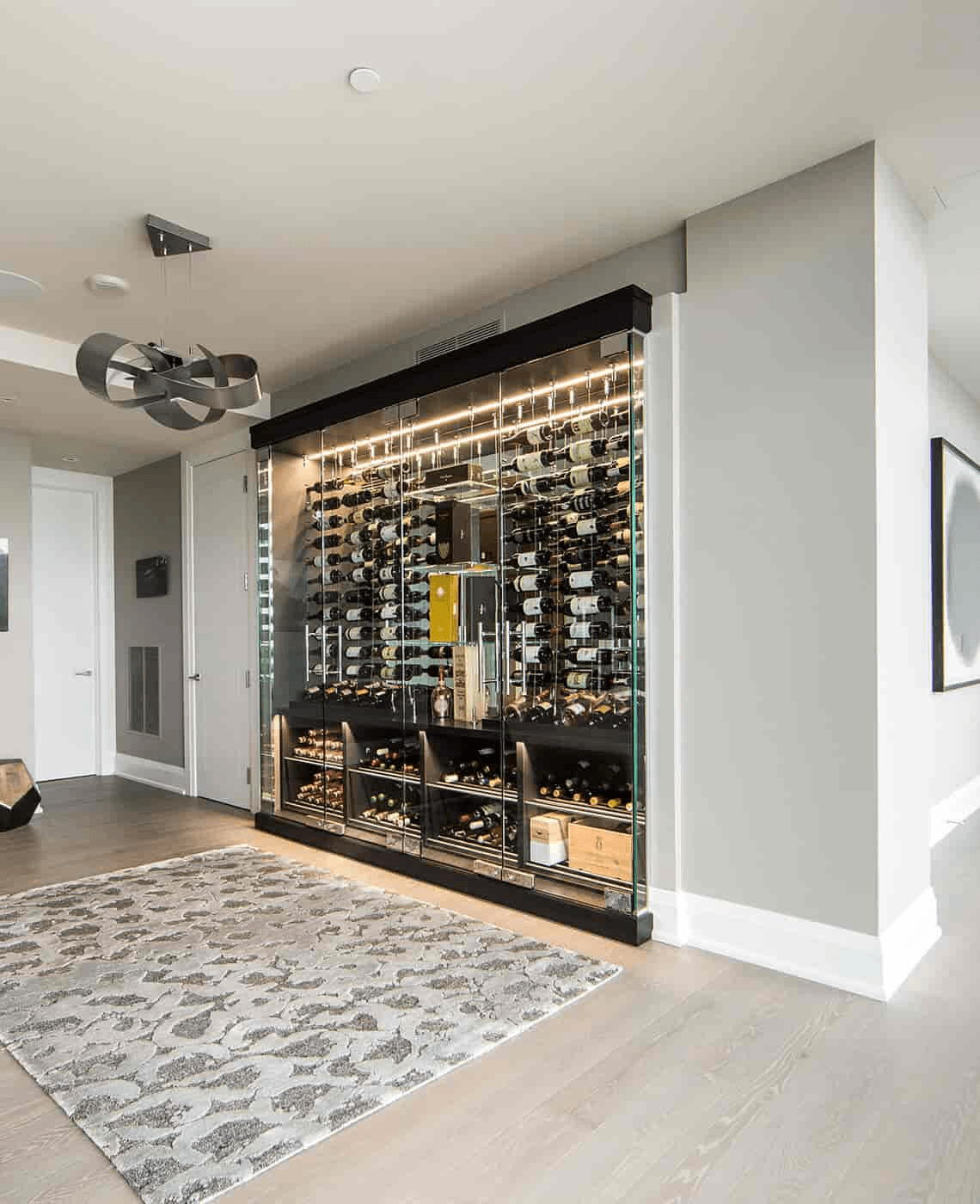
A wall-mounted rack is the better choice when you own your space, want to save floor area, and want your collection to become part of the room. This is where a cable wine wall really pulls ahead.
Choose wall-mounted when:
-
You own your home or space and can commit to a permanent feature.
-
Floor space is limited, and you would rather use a wall.
-
You want bottles at eye level with labels visible and easy to reach.
-
You want a modern, floating look that matches the room rather than fighting it.
-
You want a display that scales with your collection over time.
A wall-mounted cable system also fits places a freestanding rack struggles, like a narrow condo wall, a dining room feature wall, a restaurant, or a wine bar. If you like the floating aesthetic, our look at modern wine racks shows how the display works in different rooms.
What Does Installing a Wall-Mounted Wine Rack Actually Involve?
Installing a cable wine wall involves anchoring the system to a structurally reinforced ceiling or top mounting area, which is why professional installation matters. This is not a peel-and-stick project, and the payoff is a display that holds a full collection securely for years.
A few practical points:
-
The weight is carried mostly from the ceiling or top mounting area, so that structure needs to be properly reinforced to support a full display of bottles.
-
Because it is custom-built to your wall, the layout and bottle spacing are planned before anything is mounted.
-
It is designed to work with a finished room rather than requiring a gut renovation, but it is not a DIY job. Cable Wine Systems recommends qualified, experienced contractors for the install.
That planning step is also where you decide bottle spacing. If you collect champagne or large formats, spacing changes, and our guide to large-format wine bottle sizes explains how bottle dimensions affect the design.
Does Either Option Keep Wine at the Right Temperature?
No. Neither a freestanding rack nor a wall-mounted wine wall controls climate on its own. Both are display and racking systems, not cooling units. This is the honest caveat that applies to every rack, whatever the format.
-
For short-term storage of bottles you will drink soon, room placement is fine, as long as you keep them away from heat, light, and vibration.
-
For long-term aging, the rack needs to sit in a climate-controlled room or pair with a cooled space held around 55°F (13°C), within a steady 55-59°F range, and 50-70 percent humidity, with about 60 percent ideal.
The rack protects and presents your wine. The room does the aging. You can read more about pairing a wine wall with the right environment in our comparison of a wine wall vs. a traditional wine cellar.
Which Wine Rack Fits Your Room? A Few Real Scenarios
The right answer changes room by room, so here are a few common situations and the format that usually fits best.
-
A rented apartment: A freestanding rack. You keep your bottles organized now and take the rack with you when you move, no wall repairs needed.
-
An open-plan living or dining room you own: A wall-mounted cable wine wall. It turns an unused wall into a floating display and leaves the floor clear for furniture.
-
A narrow condo with little floor space: A wall-mounted system. A slim vertical run stores far more than a floor rack could fit in the same square footage.
-
A restaurant or wine bar: A wall-mounted cable wall. It puts the list on display at eye level, scales to the space, and keeps the floor open for seating and service.
-
A weekend entertainer with a growing collection: A wall-mounted system that starts small and adds sections as the collection grows.
If your situation sits between two of these, our team can help you weigh it during a custom design consultation.
Wall-Mounted vs. Freestanding Wine Racks: Frequently Asked Questions
Are wall-mounted wine racks a good idea?
Yes, especially if you own your space and want to save floor area. A wall-mounted cable system stores a large collection vertically, keeps labels visible, and turns the wall into a feature.
How many bottles can a wall-mounted wine rack hold?
A small decorative rack holds only a few, but a floor-to-ceiling cable wine wall can hold a large collection, because it scales up the wall section by section. The exact number depends on the size of your wall and the spacing you choose.
Can renters use wall-mounted wine racks?
Renters are usually better served by a freestanding rack, since wall-mounted systems are permanent and anchor into the wall. If you own or plan to stay, wall-mounted is the stronger long-term choice.
Wall-mounted or freestanding for a large collection?
For a large collection in a fixed space, a wall-mounted cable wine wall is typically the better fit, because it scales vertically without consuming floor space.
Conclusion: Choosing the Right Wine Rack for Your Space
Wall-mounted vs. freestanding wine racks have less to do with big versus small storage than with your space and how long you plan to stay in it. If you rent or want flexibility, a freestanding rack is a sensible, movable option. If you own your space, want to reclaim floor area, and want your collection to become part of the room, a wall-mounted cable wine wall gives you capacity, visibility, and a modern look that a floor rack cannot match.
And whichever you choose, keep the wine itself in mind. A rack displays and organizes your bottles. Long-term aging still depends on a steady 55°F (13°C) and 50-70 percent humidity.
Ready to see what a wine wall could look like in your space? Request a quote from Cable Wine Systems and get a custom design built around your room and your collection.