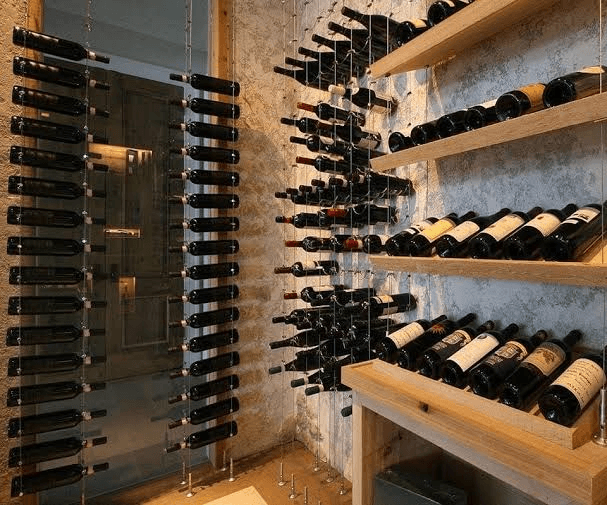
Choosing between wood vs. metal wine racks is really a choice about how you want your collection to look, how much space you have, and how well the rack will hold up over the years. Both can store wine well. They behave very differently, though, once you factor in humidity, weight, sightlines, and time. This guide breaks down the honest trade-offs, shows you where each material genuinely wins, and explains why the modern choice is not always the one most buying guides point you toward.
One thing to clear up first. “Metal” is not a single category, and treating it that way is where most comparisons go wrong.
Wood vs. Metal Wine Racks: What Is the Real Difference?
The real difference is that wood is a warm, traditional material that reacts to its environment, while metal is a stable, low-maintenance material that mostly ignores it. Wood brings the classic cellar look and can be built into custom joinery. Metal resists moisture, carries more weight, and suits modern, open interiors.
But there is a second split hiding inside “metal.” A welded metal kit rack and a high-tension cable wine wall are not the same product:
- Wood racks are typically built from hardwoods like mahogany, walnut, or cherry, with bottles lying horizontal in individual openings or bins.
- Welded or bolt-together metal kits are fixed-size frames, often steel, that sit on the floor or mount to a wall.
- Cable wine walls suspend each bottle on high-tension stainless-steel cables with chromed solid brass clamps, creating a floating, label-forward display that mounts to a wall or spans floor to ceiling.
Keep that three-way split in mind. Most of the “wood vs. metal” advice online compares wood against a basic metal kit and never mentions the cable system, which changes the answer on capacity, footprint, and design.
How Do Wood and Metal Wine Racks Compare?
Here is the quick side-by-side. Cost rows reflect typical US pricing context.
| Factor | Wood Wine Rack | Metal Cable Wine Wall |
| Reaction to humidity | Can swell, warp, or grow mold outside 50-70% | Stainless cable and brass are inert to cellar humidity |
| Durability over time | Excellent in stable conditions, needs upkeep | Very high, little to no maintenance |
| Weight capacity | Good, depends on joinery | High, engineered for full walls of bottles |
| Floor space used | Moderate to large | Minimal, mounts to the wall |
| Label visibility | Usually hidden, bottles lie deep | Label-forward, cork-forward, or angled |
| Look | Warm, traditional, cellar-classic | Modern, floating, design-forward |
| Best setting | Dedicated climate-controlled cellars | Living spaces, kitchens, condos, commercial rooms |
| Cost | Wide range, custom builds climb quickly | A fraction of the cost of a built-in cellar |
How Does Humidity Affect Wood vs. Metal Wine Racks?
Humidity is where the two materials separate the most. Wood is porous and moves with the room, while stainless steel and brass do not. In a proper wine environment, you want relative humidity between 50 and 70 percent, with about 60 percent as the sweet spot. Too dry and corks start to dry out. Too damp and you invite mold and ruined labels.
How wood reacts to humidity
Wood lives inside that window with less margin for error. If humidity swings 50 percent below or climbs above 70 percent, hardwood can shrink, expand, gap, or warp over time. Well-seasoned, well-finished wood in a stable cellar performs beautifully for decades. Poorly prepared wood in a variable room does not.
How a cable wine wall reacts to humidity
A cable wine wall sidesteps most of this. The stainless-steel cable and chromed brass hardware do not absorb moisture, so they do not warp or corrode at normal cellar humidity. That makes the cable system forgiving in spaces that are not perfectly controlled, like a kitchen, a dining wall, or an open-plan living area.
One important caveat on climate
A wine wall is a display and racking system, not a cooling unit. The hardware resists humidity, but it does not create the right climate on its own. For long-term aging, you still want the wall in a climate-controlled room or paired with a cooled space held around 55°F (13°C), ideally within a steady 55-59°F range. Consistency matters more than hitting an exact number.
Which Is More Durable Over Time?
Metal is the more durable choice in most real-world settings, and a stainless cable system is the most forgiving of all. Wood can absolutely last a lifetime, but only when the room cooperates and the rack is maintained. Metal asks far less of you.
Think about what each material has to survive over the years:
- Wood must resist moisture absorption, mold, and seasonal shrinking or swelling, and it benefits from occasional refinishing or resealing.
- Stainless cable and brass must resist corrosion, which they are built to do by design, with no refinishing, resealing, or warped shelves to watch for.
For a collector who wants to set it and forget it, that difference adds up over 10 or 20 years.
How Much Can Each Rack Hold, and How Much Space Does It Take?
A cable wine wall usually wins on capacity per square foot, because it stores bottles vertically on the wall instead of eating floor space. This is the point most guides miss when they assume metal means a small kit rack.
Wood racks and floor-standing metal kits both take up floor area, and their capacity is capped by their footprint. A cable system works differently in three ways:
- It uses the wall, not the floor, so it does not compete with your furniture for space.
- It runs floor to ceiling, turning a narrow strip of wall into storage for a large collection.
- It scales section by section, so you size it to the wall you have and add more as your collection grows.
That combination, minimal footprint plus vertical capacity, is exactly why cable walls suit condos, open-plan homes, restaurants, and wine bars where floor space is precious. You can see this range of layouts in the Cable Wine Systems gallery.
Which Looks Better in a Modern Home?
For modern and open-plan interiors, a cable wine wall usually looks more at home, while wood suits traditional, enclosed cellars. This one depends on the style of your space.
Wood reads warm, classic, and cellar-like. In a dedicated cellar with stone, low light, and rich tones, it is hard to beat. A cable system reads architectural. Bottles appear to float, labels face outward, and the hardware disappears into the design so the wine becomes the feature. With finish options that range from warm wood accents to matte black and chrome, a wine wall tends to match the room rather than fight it. If you are weighing display styles, our overview of modern wine racks walks through the look in more detail.
When Is a Wood Wine Rack the Right Choice?
Wood is the right call when you have a dedicated, climate-controlled cellar and you want a traditional, custom-built look. We will say that plainly, because pretending otherwise would not help you.
Choose wood when:
- You have a dedicated cellar held steadily around 55°F (13°C) and 60 percent humidity.
- You want a warm, classic aesthetic or custom joinery to match existing millwork.
- Bottles will sit for long-term aging in a stable, purpose-built room.
- The traditional cellar feel is the whole point of the project.
In those conditions, quality hardwood is a genuinely excellent choice and can last for generations.
When Is a Metal Cable Wine Wall the Better Choice?
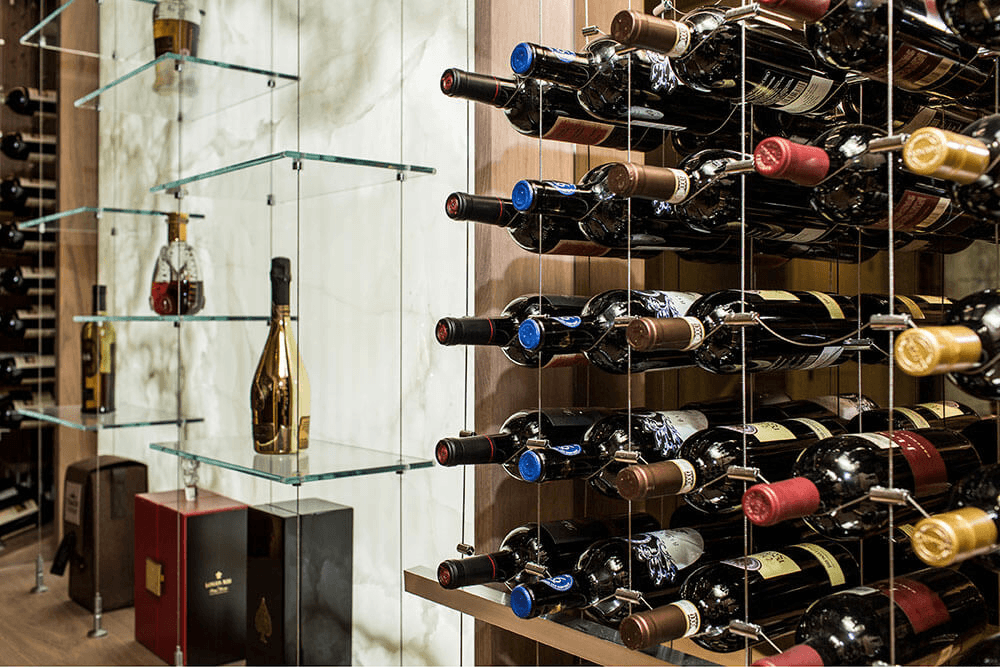
A cable wine wall is the better choice when you want maximum capacity in minimal space, a modern look, and a rack that shrugs off humidity and maintenance. That covers a lot of real homes.
Choose a cable system when:
- You want to store wine in a living space, kitchen, dining area, or condo rather than a separate cellar.
- Floor space is limited, and you would rather use the wall.
- You want labels visible so you can find and show off bottles easily.
- You prefer a modern, floating aesthetic over a traditional rack.
- You want a display that scales section by section and costs a fraction of a full built-in cellar.
It also handles a range of bottle shapes and sizes, from standard 750 ml bottles to champagne and large formats. If you collect bigger bottles, our guide to large-format wine bottle sizes explains how bottle dimensions affect the spacing you need.
Wood vs. Metal Wine Racks: Frequently Asked Questions
Are metal or wood wine racks better?
Neither is universally better. Metal, especially a stainless cable system, is more durable, more humidity-tolerant, and more space-efficient. Wood is warmer and more traditional, and it excels in a dedicated, climate-controlled cellar.
Do metal wine racks rust in a wine cellar?
Quality stainless steel and chromed brass do not rust at normal cellar humidity, which is why cable wine walls hold up so well in damp or variable rooms.
Do wooden wine racks warp?
They can, if humidity drops below 50 percent or rises above 70 percent, or if temperatures swing. Stable conditions and well-finished hardwood prevent most of it.
Which holds more wine in a small space?
A wall-mounted cable system, because it stores bottles vertically and can run floor to ceiling without using floor space.
Conclusion: Making the Right Call for Your Space
The right wood vs. metal wine rack choice depends on your space and how you live with your wine. If you have a dedicated cellar and love the traditional look, wood is a beautiful, lasting choice. If you want to store and show your collection in a modern living space, save floor area, and skip the maintenance, a metal cable wine wall is hard to beat.
Remember the honest part too. Whichever rack you choose, long-term aging still depends on keeping the room around 55°F (13°C) and 50-70 percent humidity. The rack displays and protects your bottles. The climate does the aging.
Ready to see what a wine wall could look like in your space? Request a quote from Cable Wine Systems and get a custom design built around your room and your collection.