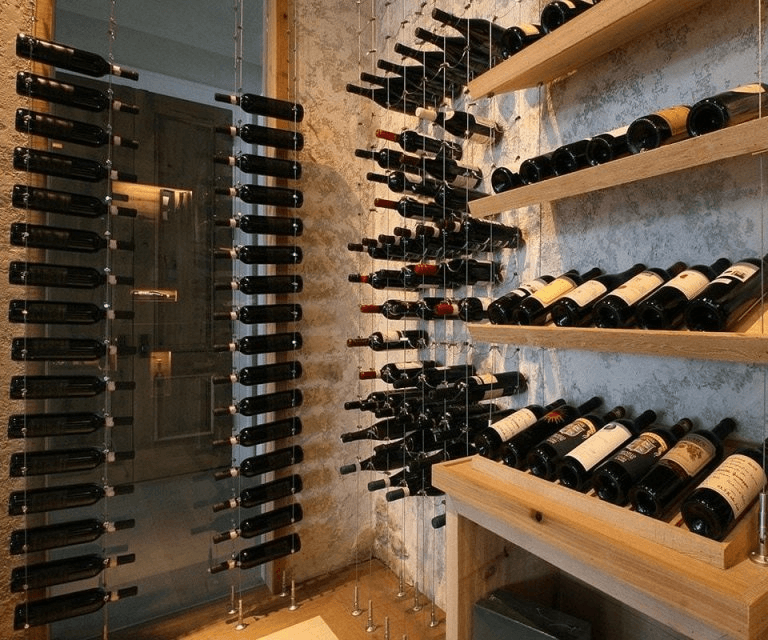
Deciding how to store and show off a growing collection usually comes down to one question: wine wall vs wine cellar. Both protect your bottles, and both can look stunning, but they solve the problem in very different ways and at very different price points. A wine wall turns your bottles into a vertical display that mounts to the wall and uses almost no floor space. A traditional wine cellar is a dedicated, climate-controlled room built for serious, long-term aging. This guide breaks down the real differences in cost, space, temperature, and style, so you can decide which option fits your home, your budget, and the way you actually live.
What Is a Wine Wall? (And How Does It Work?)
A wine wall is a wall-mounted or floor-to-ceiling display that suspends bottles in neat rows, turning your collection into a design feature. It lives in the room you already use, not a separate cellar.
Modern wine walls use slim metal hardware instead of bulky wooden cubbies. A cable system, for example, holds each bottle on high-tension stainless-steel cables anchored between the floor and ceiling or within a frame. The result is a clean, almost floating look that keeps labels visible and the wall behind it on display. You can set bottles label-forward, cork-forward, or angled, add floating shelves, and light the whole thing from above or below.
Because the footprint is so small, a wine wall fits where a room never could: a dining room accent wall, a hallway, a corner, or the space under a staircase. Good wine wall design starts with the finish, from warm wood tones to sleek matte black or chrome hardware, so the display matches the room rather than fighting it. You can see how different layouts look in real homes in the Cable Wine Systems gallery.
One important point up front. Do wine walls keep wine at the right temperature? On their own, no. A wine wall is a display and racking system, not a cooling unit. For long-term aging, the wall needs to sit in a room that is already climate controlled.
What Is a Traditional Wine Cellar?
A traditional wine cellar is a dedicated, sealed room with its own cooling and humidity control, built specifically to age wine over the years. It is the gold standard for large collections and long-term storage.
A true cellar is more than a room full of racks. It needs insulation, a vapor barrier, an insulated door, rot-resistant flooring, and an active cooling system that holds a steady temperature and humidity year-round. Basements are popular because they are naturally cool and dark, but a cellar can also be carved out of a closet, a spare room, or a new build.
The payoff is total environmental control and serious capacity. A modest room can hold several hundred bottles, and a full custom build typically runs eight to sixteen weeks from design to completion. The trade-off is that a cellar is a construction project, with the cost, timeline, and permanence that come with it. Once it is built, it stays where it is, and the room is committed for good.
Wine Wall vs Wine Cellar: A Side-by-Side Comparison
The short answer: a wine wall wins on cost, space, and visual impact, while a traditional cellar wins on built-in climate control and large-scale capacity. The table below lays out the key differences between wine walls and wine cellars across the factors that matter most for home wine storage. For a closer look at how cable racking stacks up against traditional wood racks, see the Cable Wine Systems benefits page.
|
Factor |
Wine Wall |
Traditional Wine Cellar |
| Space required | Minimal. Mounts to an existing wall or spans floor to ceiling | Dedicated room or large footprint |
| Cost (US) | Lower upfront and scalable, often hundreds to a few thousand per section | Higher build plus ongoing cooling costs |
| Temperature | Needs a climate-controlled room around it | Built-in temperature and humidity control |
| Visual impact | High. Display-forward, open, and modern | Hidden or classic cellar aesthetic |
| Installation | Professional and non-invasive, into a reinforced surface | Major construction and permits |
| Scalability | Easily expanded or reconfigured | Fixed once built |
| Best for | Modern, open-plan homes and smaller footprints | Serious collectors and large estates |
When a Wine Wall Is the Right Choice
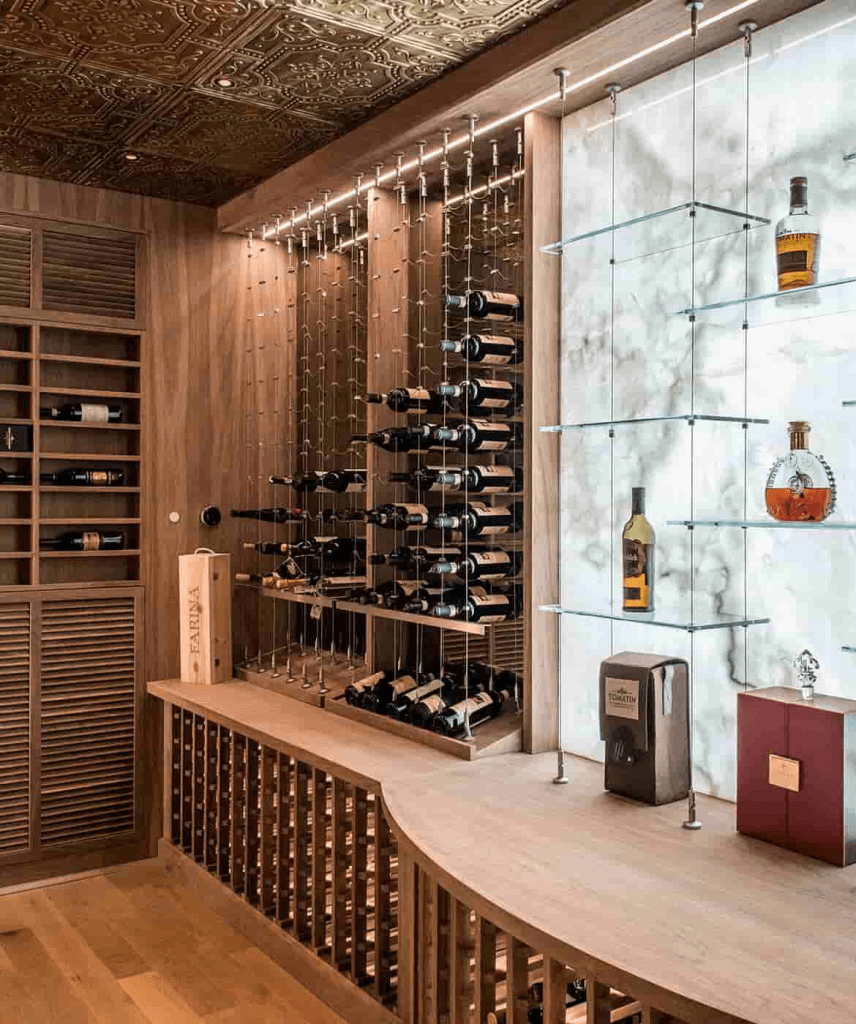
A wine wall is the right choice when you want your collection on display, you are working with limited square footage, or you do not want a construction project. It is also the best wine storage option for small spaces.
This is the option that suits most modern US homes. Open-plan layouts, contemporary interiors, and modern farmhouse kitchens are built around sightlines and light, and a wine wall adds to that instead of hiding behind a door. It mounts to a wall you already have, so you are not giving up a bedroom or finishing a basement to get it.
A wine wall also grows with you. Start with a single section and add more as the collection expands, or reconfigure the layout if you move. That flexibility is hard to match with a fixed build, and it is worth seeing how modern racking compares to more traditional systems before you commit.
Choose a wine wall if you are a homeowner or collector who values design, flexibility, and a smaller upfront spend, and you are comfortable pairing it with a cooled space for any bottles you plan to hold for the long haul.
When a Traditional Wine Cellar Makes More Sense
A traditional cellar makes more sense when you are storing hundreds or thousands of bottles for years and want guaranteed climate control without relying on the room around the racks. It is built for serious, long-term collecting.
The clearest pros of a traditional wine cellar are capacity and control. You get precise, built-in temperature and humidity, protection from light and vibration, and room to grow a large collection in one place. For a dedicated collector or someone building a high-end home, that level of control is worth the investment.
The cons are equally clear. A cellar is expensive, it takes weeks to build, it consumes a dedicated room, and it is permanent. You also take on an ongoing cooling system to maintain and run. If you ever sell, the cellar stays with the house, whether the next owner wants it or not.
Choose a traditional cellar if you are a serious collector with a large, age-worthy collection, you have the space and budget for a full build, and total environmental control is your top priority.
What About Cost? Wine Wall vs Wine Cellar Budgets in the US
A wine wall is the lower-cost, scalable option, while a traditional cellar is a major build. US cost guides put a typical residential cellar at roughly $15,000 to $60,000, with simple closet conversions starting around $5,000 and luxury builds running past $100,000.
That cellar figure covers framing, insulation, an insulated door, finished surfaces, racking, and an active cooling system. Many guides peg the work at around $300 to $600 per square foot, and a dedicated cooling system also brings annual maintenance into the picture. It is a real renovation, priced like one.
A wine wall sits in a different category. The display and racking itself often runs from a few hundred dollars for a small section to a few thousand for a larger, fully installed feature, scaling with the number of bottles and the finish you choose. Custom systems are quoted to your space, but the headline is consistent: a wine wall costs a fraction of a built-in cellar.
One honest caveat keeps the comparison fair. A wine wall handles display and racking, not cooling. If you plan to age wine for years, budget for the wall to live in a climate-controlled space. For short-to-medium-term storage and everyday drinking in a stable indoor room, the wall alone does the job at a much lower entry cost.
Space Requirements: What Each Option Actually Demands
A wine wall needs only a structurally sound wall and the ceiling height to mount to. A traditional cellar needs a sealed, insulated, climate-controlled room. That difference in footprint is the deciding factor for many homeowners.
For a wine wall, the key requirement is a reinforced mounting surface that can carry the tension and the weight of full bottles. There is no dedicated room, no excavation, and no lost square footage, which is exactly why these displays work in apartments, condos, and open-plan homes. You can read more about mounting and installation in the Cable Wine Systems FAQ.
A traditional cellar demands a whole room that can be sealed and cooled, ideally somewhere naturally cool and dark like a basement. You are committing that space permanently, and the room has to be prepared to hold a stable environment. If you have the space and want maximum capacity, that is a fair trade. If you do not, a wine wall is the practical answer.
The Cable Wine Systems Approach to Modern Wine Walls
Once you have compared the two, the wine wall usually wins for anyone who wants display, flexibility, and a smaller spend, and that is exactly where Cable Wine Systems fits.
The system is built from high-tension stainless steel cable with chromed solid brass clamps and tension mounts, assembled on site so the spacing and layout match your room and your bottles. It accommodates a wide range of bottle shapes and sizes, supports label-forward, cork-forward, and angled displays, and can be lit to highlight the collection. Because each custom wine rack is built to order, the wall fits tight corners, under-stair nooks, and full feature walls alike, all for a fraction of the cost of a built-in.
It is a way to get the visual drama of a wine room without giving up a room or taking on a full renovation.
Conclusion: Making the Right Call for Your Home
Choosing between a wine wall and a traditional wine cellar comes down to three things: space, budget, and goals. If you want your collection on display, you are short on square footage, and you would rather scale up over time than commit to a build, a wine wall is the right call, paired with a cooled space for long-term bottles. If you are a serious collector with a large, age-worthy collection, the room to spare, and the budget for guaranteed climate control, a traditional cellar earns its cost.
Ready to see what a wine wall could look like in your space? Request a quote from Cable Wine Systems and get a custom design built around your room and your collection.