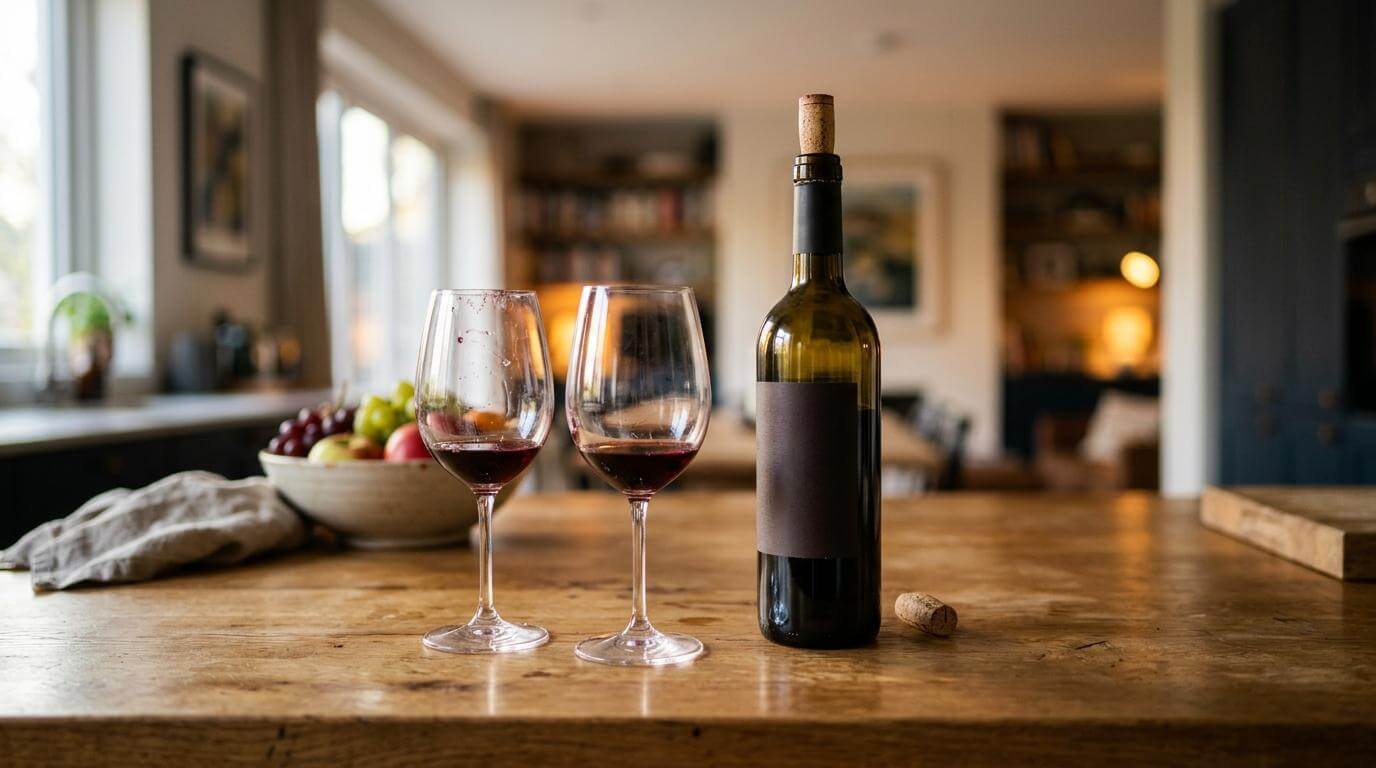
You poured a couple of glasses last night, recorked the bottle, and left it on the counter. This morning it is still sitting there, half full, and you are wondering whether it is still worth drinking or whether you should pour it down the sink.
Here is the fast answer. Most opened wine lasts 3 to 5 days once it is recorked and refrigerated. Unopened wine lasts anywhere from about a year to several decades, depending on the type and how well it was stored. How long any bottle holds up, opened or not, comes down mostly to oxygen and storage conditions. This guide covers both states, every major wine type, how to tell when a bottle has turned, and how to stretch its life.
How Long Does Wine Last After Opening?
Most opened wines last 3 to 5 days when you recork them and refrigerate them, though the range runs from a single day for sparkling to a few weeks for fortified styles. The clock starts the moment you pull the cork, because that is when the wine meets a fresh supply of oxygen.
Oxygen softens a wine in the glass for the first hour, then over the following days flattens its aromas and dulls its fruit. A bottle you left mostly full holds up longer than one you drank three quarters of, because the less wine left behind, the more air sits on top of it. That is why a good reseal and a cold fridge buy you extra days.
Why Does Wine Go Bad?
Wine goes bad for two related reasons: oxygen slowly oxidizes it, and acetic acid bacteria gradually turn its alcohol into vinegar. Both are always in motion once air reaches the wine, and both speed up in warmth.
Oxidation is the quieter of the two. It browns the color, mutes the fruit, and leaves the wine tasting tired and a little nutty. The bacterial side is louder: given enough air and time, the microbes that make vinegar convert the ethanol in your wine into acetic acid, the sharp, sour smell you catch when a bottle has clearly gone. Cool temperatures slow both reactions, which is why storage temperature matters so much.
Does Drinking Old or Spoiled Wine Make You Sick?
Usually not. Wine that has oxidized or started turning to vinegar tastes unpleasant, but it is not dangerous the way spoiled food can be, because its alcohol and acidity keep the bacteria that cause foodborne illness at bay. The worst most people get from a sip of turned wine is a bad taste and the urge to spit it out. If a wine smells or tastes off, the reason to stop is quality, not safety.
How Long Does Each Type of Wine Last? (Opened vs. Unopened)
Shelf life depends heavily on the style of wine, so here are the numbers side by side instead of type by type. The table below covers how long each type typically lasts once opened, assuming you reseal it and refrigerate it, alongside how long a well-stored unopened bottle tends to hold.
| Wine type | Opened (recorked, refrigerated) | Unopened (well stored) |
| Red wine | 3 to 5 days | 2 to 10+ years |
| White wine and rosé | 2 to 3 days full-bodied, 5 to 7 days lighter styles | 1 to 3 years |
| Sparkling wine | 1 to 3 days with a stopper | 1 to 3 years |
| Fortified wine | up to 28 days | 4 to 20+ years |
| Boxed wine | 2 to 6 weeks | about 6 to 12 months before opening |
Red Wine
Opened red wine generally lasts 3 to 5 days in the fridge with the cork back in. Reds tend to outlast whites once open because their tannins, and often their higher alcohol, buffer against oxidation. A bold, tannic young Cabernet often tastes fine on day four, while a delicate Pinot Noir may fade sooner. Unopened, an everyday red is happy for a couple of years, and age-worthy bottles can hold and even improve for a decade or more.
White Wine and Rosé
Opened white and rose wines usually last 2 to 3 days for richer, full-bodied styles and up to 5 to 7 days for lighter, crisp ones. Their higher acidity helps a little, but without much tannin, they oxidize faster than reds, so keep them cold and sealed. Unopened, most whites and rosés are best within 1 to 3 years of the vintage, since the large majority are made to drink young and fresh, not to age.
Sparkling Wine
Opened sparkling wine lasts 1 to 3 days if you seal it with a proper sparkling stopper, and far less with a loose cork or none at all. The problem here is oxidation plus the loss of carbonation, which is the whole point of the wine. A sparkling stopper preserves pressure and keeps the bubbles alive for a day or two. Unopened, most Champagne and sparkling holds for 1 to 3 years, with vintage bottles lasting longer.
Fortified Wine
Opened fortified wines like Port, Sherry, and Madeira are the marathon runners, lasting up to 28 days and sometimes longer. The extra alcohol added during production makes them far more resistant to spoilage than table wine. Styles vary, so a delicate Fino Sherry fades faster than a rich Tawny Port, but as a group these are the bottles you can revisit over weeks, not days. Unopened, they keep for years.
Boxed Wine
Opened boxed wine lasts 2 to 6 weeks refrigerated, far longer than a bottle of the same wine. The reason is the bag inside the box: as you pour, it collapses in on itself and keeps air from filling the space above the wine, so oxygen exposure stays low. Unopened, boxed wine has a shorter runway, usually best within 6 to 12 months, because the packaging is built for freshness now, not years of cellaring.
Does Unopened Wine Go Bad?
Yes, unopened wine does eventually go bad, but slowly, and poor storage is usually the real culprit rather than age by itself. A sealed bottle kept somewhere hot, bright, and full of temperature swings can decline in months, while the same bottle in cool, dark, stable conditions rests for years.
It helps to be honest about what most wine is for. The large majority of what you find on a supermarket shelf is made to be enjoyed within a year or two of release, not laid down for a decade. Only a small share of wine, built with the structure to age, actually rewards long cellaring. For everything else, “does it expire” is less about a hard date and more about a slow slide in quality once it passes its window, which you can see in the unopened column above. If you want the bottles you are keeping to reach their best, the benefits of proper storage and display come down to holding them in good conditions and drinking them before that window closes.
How to Tell if Wine Has Gone Bad
The most reliable test is your own senses, so before you worry about dates, look at the wine, smell it, and taste a small sip. These four checks catch almost every bad bottle.
Look
Pour a little and check the color. A white that has turned deep gold or brown, or a red that looks brick and murky when it should be bright, is showing oxidation. Cloudiness, or unexpected fizz in a still wine, are also warning signs.
Smell
Give the glass a swirl and a sniff. Sharp vinegar, a whiff of nail polish remover, or a musty wet-cardboard smell all point to a wine that is past it. Fresh wine smells of fruit, flowers, or earth. Wine that has turned smells like a cleaning cupboard.
Taste
If it looks and smells uncertain, take a small taste. Wine that has gone bad tastes flat and lifeless, or sharp and sour like it is halfway to vinegar. You will know quickly: a good wine tastes alive, and a bad one makes you reach for the sink.
Check the Cork
A cork pushed slightly up above the rim, or one that is wet and wine-stained on top, suggests the bottle got too warm and pushed wine past the seal. That does not guarantee spoilage, but it is a reason to inspect the wine closely before pouring.
How to Make Wine Last Longer
To make wine last longer, reseal it right away, refrigerate it, and keep it cool, dark, and steady. Those moves address the one thing that ruins wine fastest, which is contact with air in a warm room.
For a bottle you have already opened, push the original cork back in, or use a wine stopper for a tighter seal. Put the bottle in the fridge, even a red, because cold slows oxidation for every style. If you have drunk more than half, decant the rest into a smaller clean bottle so less air sits on the wine. A vacuum pump or an inert-gas wine preserver buys even more time by removing or displacing that air, and for sparkling, a dedicated stopper is the only thing that keeps the bubbles.
For unopened bottles, the bigger lever is where and how you store them. Wine keeps best around 55°F (13°C) with 50 to 70% humidity, about 60% being ideal, away from light and vibration, with the bottles lying on their side so the cork stays moist and sealed. Stable conditions matter more than a perfect number, so a spot that stays consistently cool beats one that swings between hot afternoons and cold nights.
Where You Store Wine Matters
Where you keep your bottles decides how gracefully they age, so it is worth being clear about what different storage does. A wine wall or custom cable wine racking system is a display and organization solution, not a cooling unit. For long-term aging, wine belongs in a climate-controlled space that holds those conditions steady.
That said, good racking still does real work. It keeps bottles on their side so corks stay moist, holds them free of vibration, and lays out your collection so you can find, rotate, and drink each bottle inside its window. Organized, properly oriented storage protects the wine you own and makes it far more likely you enjoy every bottle at its best instead of losing one at the back until it fades.
Frequently Asked Questions
How long does red wine last after opening?
About 3 to 5 days when you recork it and keep it in the fridge. Tannic, full-bodied reds tend to hold toward the longer end, while lighter, delicate reds fade sooner.
Does unopened wine expire?
Its quality fades over time, but it does not become unsafe to drink. Storage decides the timeline far more than the age printed on the label. Kept cool, dark, and stable, most everyday wine is good for a year or two, and age-worthy bottles for much longer.
How long does boxed wine last after opening?
Around 2 to 6 weeks refrigerated. The bag inside the box collapses as you pour, which limits how much air reaches the wine, so it stays drinkable far longer than an opened bottle.
Can you drink wine that has been open for a week?
Usually it is safe to drink, but it has likely gone flat, so taste it first. A robust red or a fortified wine may still be pleasant after a week, while a delicate white or sparkling almost certainly will not.
Does wine need to be refrigerated after opening?
Yes, even reds. Cold temperatures slow the oxidation that dulls an open bottle, so the fridge is the single easiest way to add days to any wine you have already opened. Let a red warm up for a bit before you pour it again.
Conclusion: Store It Right and Drink It in Its Window
Once open, most wine gives you 3 to 5 days, sparkling closer to one, and fortified styles a few weeks, while unopened bottles range from a year for everyday wine to decades for the age-worthy few. Across all of it, storage is the variable you control. Keep bottles cool, dark, steady, and on their side, and you protect the wine you open tonight along with the wine you are saving for years from now.
If you are building a collection worth keeping organized and on display, we can help you design storage that fits your space and your bottles. Request a quote from Cable Wine Systems and let us map out the right racking for your wine.