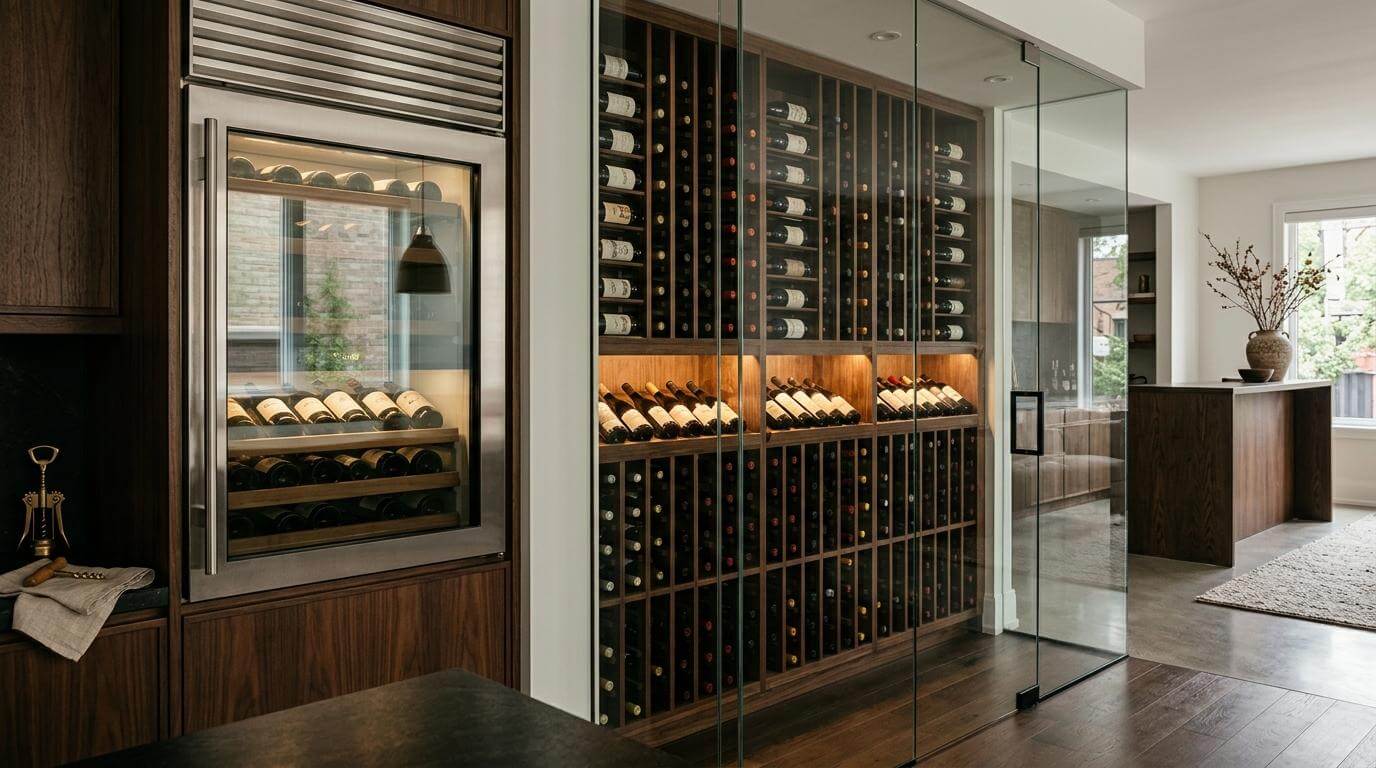
If you are deciding how to store a growing wine collection, the choice usually comes down to a wine cellar vs a wine fridge, with a wine grotto as a third option many people have never heard of. They are not the same thing, and picking the wrong one is an expensive way to find out. The right choice depends on how much wine you own, how long you plan to keep it, and what you want the space to be.
At Cable Wine Systems, we design modern wine walls for homes across the country, and we talk with collectors every week who are weighing these exact options. This guide compares the three on capacity, climate, cost, and the value they add, so you can decide with clear eyes before you spend.
What Is the Difference Between a Wine Fridge, a Wine Cellar, and a Wine Grotto?
A wine fridge is an appliance, a wine cellar is a purpose-built room, and a wine grotto is a compact, often below-grade cellar. They sit at three very different scales.
Wine Fridge
A wine fridge, also called a wine cooler, is a standalone or built-in appliance that holds anywhere from a dozen to a few hundred bottles. It is the simplest and cheapest option: it plugs in and runs, and the better units offer dual zones for serving reds and whites at different temperatures.
Its limits are capacity and, in cheaper models, how well it holds a stable climate over the long term.
Wine Cellar
A custom wine cellar is a sealed, climate-controlled room built into your home, holding wine at around 55°F (13°C) with 50 to 70% humidity for proper long-term aging.
It scales from a few hundred bottles to many thousands, and it becomes a feature of the home. Built with insulation, a vapor barrier, and dedicated cooling, it is the option for a serious collection. Inside a cellar, a wine wall is a popular way to rack the bottles and keep every label on show.
Wine Grotto
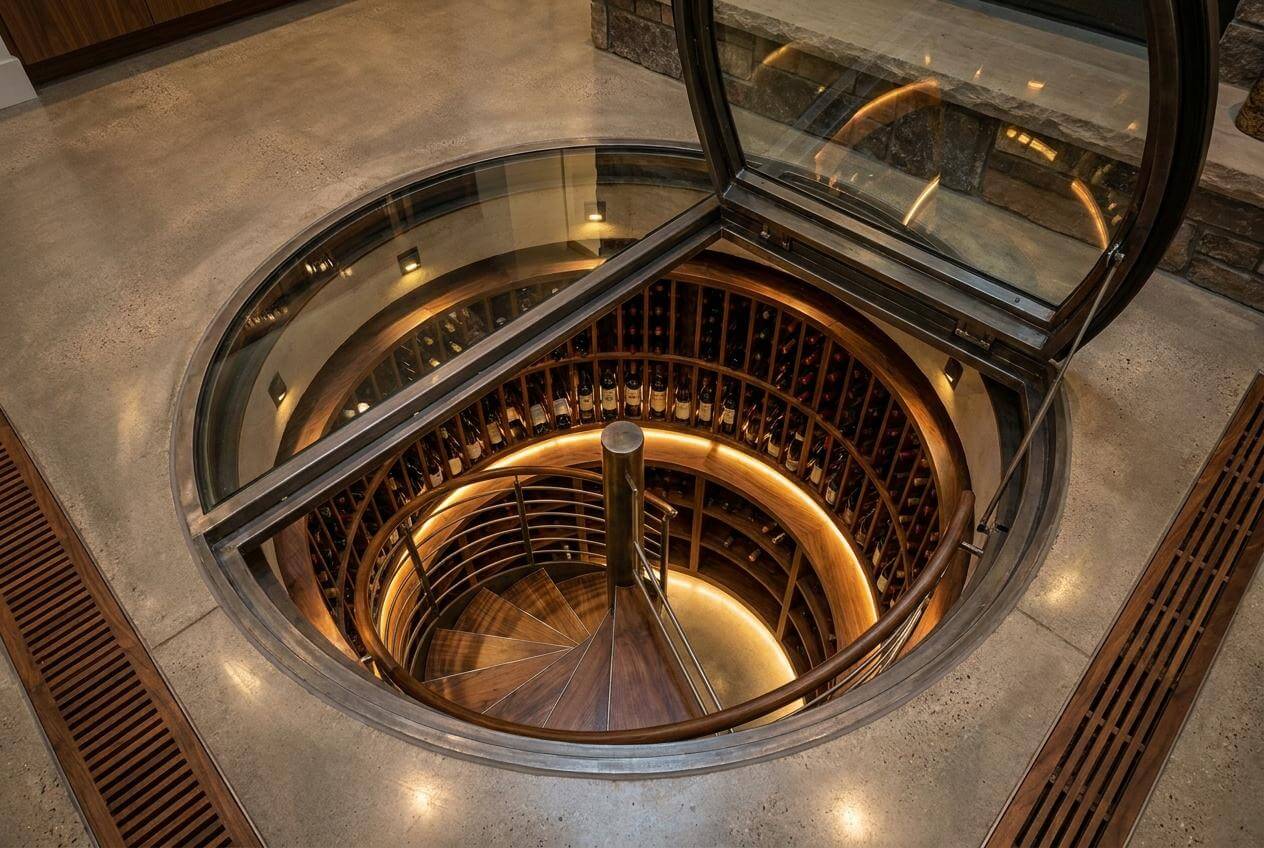
A wine grotto is a compact cellar, often a cylindrical spiral cellar set into the floor and reached by a trap door and stairs.
Being below grade, the surrounding earth helps hold a cool, stable temperature, sometimes with little or no active cooling. A grotto suits homeowners who want true cellar conditions without giving up a full room.
Comparing the Three Options
Each option answers a different combination of capacity, climate, and budget.
| Factor | Wine fridge | Wine cellar | Wine grotto |
| Typical capacity | 12 to a few hundred | Hundreds to thousands | Hundreds to ~1,500 |
| Climate | Varies by model | Around 55°F (13°C), 50 to 70% humidity | Cool and stable, earth-assisted |
| Long-term aging | Better units only | Yes | Yes |
| Adds home value | Minimal | Yes, as a feature | Yes, as a feature |
| Relative cost (US) | Lowest | Highest | Mid to high |
| Best for | Small, active collections | Serious collections | Space-limited collectors |
Which One Is Right for You?
The right choice tracks the size of your collection and how long you plan to keep the wine.
- A wine fridge suits a small, actively drunk collection, or serving storage alongside a larger cellar.
- A wine cellar suits a serious or growing collection you plan to age, especially in a home where a cellar adds value.
- A wine grotto suits a collector who wants real cellar conditions but does not have, or does not want to give up, a full room.
- A wine cabinet suits a moderate collection that needs true aging conditions without a build.
How Long Do You Plan to Keep the Wine?
The single most useful question is how long the wine needs to sit, because it separates serving storage from true aging.
Wine you will drink within a year or two only needs a steady serving temperature, which a good wine fridge holds well. Wine you intend to age for five, ten, or twenty years needs the steady climate a cellar or grotto provides, around 55°F (13°C) with 50 to 70% humidity, because small swings compound over the years and show up in the glass.
Most serious collections are a mix of both. That is a strong argument for a cellar to hold the wine that is resting, with a serving fridge nearby for the bottles in rotation.
When a Wine Fridge Is Enough
A wine fridge is the right answer more often than people expect, and it is worth being honest about that before spending on a build.
If you keep a few dozen bottles that you drink within a year or two, a quality dual-zone wine fridge holds them well and costs a fraction of a cellar. A custom cellar earns its cost when you are aging wine for years, outgrowing an appliance, or want the space to be a feature of the home. If none of those is true yet, a fridge now and a cellar later is a sensible path.
What About a Wine Cabinet?
A wine cabinet sits between a fridge and a cellar: a freestanding, climate-controlled piece of furniture that can hold cellar conditions for a moderate collection.
The best cabinets hold wine at around 55°F (13°C) with 50 to 70% humidity, the same target as a cellar, but in a self-contained unit that needs no construction. They suit collectors who want proper aging conditions for a few hundred bottles without giving up a room, or who rent and cannot build.
The trade-offs are capacity and presence, since a cabinet will not match a cellar’s scale or become an architectural feature. For many homes, a quality cabinet is the right middle step before a full cellar.
Where a Wine Wall Fits
Whichever route you choose, a wine wall is how you display the bottles once the climate is handled.
A wine wall from Cable Wine Systems suspends bottles on high-tension stainless-steel cables, using almost no floor space and keeping every label in view. It is a display and racking system, not a cooling unit, so it belongs inside a climate-controlled room, a cellar, or a cooled space rather than out in the open for long-term storage.
Because it is built to order and scales section by section, a wine wall fits the wall you have, at a fraction of the cost of a full built-in cellar. It is the reason many collectors pair a modern display with a proper storage climate rather than choosing one over the other.
Common Mistakes (and the Fix)
Mistake 1: Aging wine long-term in a basic wine fridge
An entry-level fridge holds a serving temperature but drifts too much for years of aging.
The fix: for long-term aging, use a cellar, grotto, or cabinet that holds a steady 55°F (13°C) with 50 to 70% humidity.
Mistake 2: Building a cellar without planning the climate
A beautiful room that cannot hold its numbers is not a cellar.
The fix: plan the insulation, vapor barrier, and cooling together from the start, whichever option you choose.
Frequently Asked Questions
Is a wine fridge the same as a wine cellar?
No. A wine fridge is an appliance that holds a limited number of bottles, while a wine cellar is a sealed, climate-controlled room that holds wine at around 55°F (13°C) with 50 to 70% humidity for long-term aging and much greater capacity.
Can you age wine long-term in a wine fridge?
Only in better units, and only to a point. Many wine fridges hold a serving temperature but let humidity and temperature drift over the years, which is not ideal for long aging. A cellar, grotto, or cabinet is the better home for wine you plan to keep.
What is a wine grotto?
A wine grotto is a compact cellar, often a cylindrical spiral cellar set into the floor and reached by a trap door. Because it sits below grade, the surrounding earth helps hold a cool, stable temperature, sometimes with minimal active cooling.
Do you still need cooling in a wine cellar?
Almost always. A wine cellar needs dedicated cooling to hold a steady 55°F (13°C) with 50 to 70% humidity through the seasons. Only some below-grade grottos can rely on the earth alone.
Is a wine cabinet better than a wine cellar?
Neither is better outright, since they suit different collections. A wine cabinet gives true aging conditions for a few hundred bottles with no construction, while a cellar offers far greater capacity and becomes a feature of the home. A cabinet is often the right step before a cellar.
Conclusion: Choosing the Right Home for Your Wine
The right way to store wine depends on your collection, your space, and your plans, and it is worth getting the decision right before you spend. A wine fridge is plenty for a small, active collection, while a cellar, grotto, or cabinet is the home for wine you intend to age.
Ready to see what a wine wall could look like in your space? Request a quote from Cable Wine Systems and get a custom design built around your room and your collection.