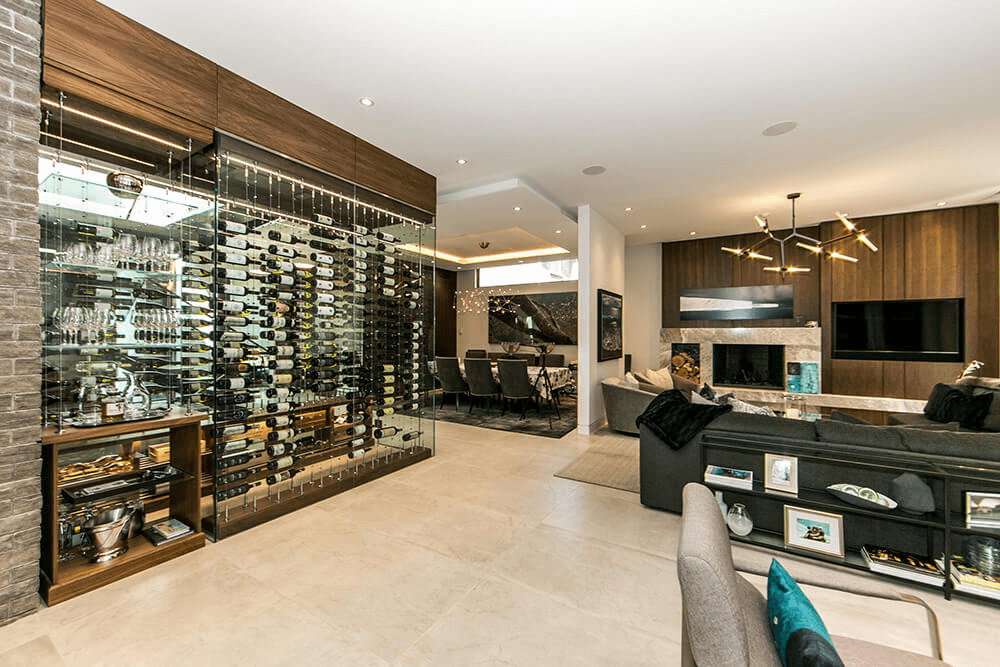
Choosing the right wine display for your home is more than a storage decision. It shapes how your space looks, how your collection grows, and how guests experience your home the moment they walk in. Whether you are storing 20 bottles or 2,000, getting the decision right from the start saves you time, money, and future regret.
This guide walks you through every factor that matters, from wall space and bottle count to materials, finish, and whether you need a professional to handle installation.
How Much Space Do You Actually Have?
Measure your wall height, width, and depth before anything else. Cable wine systems work in tight corners, under stairs, or across full walls. The key is knowing your exact dimensions before you shop.
Start with a tape measure, not a wish list.
Cable wine systems run vertically from floor to ceiling, with tension cables anchored at the top and bottom mounting points. That means ceiling height is the first number you need.
Most residential installations work with standard ceiling heights of 8 to 10 feet. Taller ceilings offer more bottle capacity per linear foot of wall space. But even a modest 8-foot wall can support a striking display.
Think beyond the obvious spots. Under a staircase, along a hallway wall, or in a dining room corner are all spaces where a cable wine system can turn dead square footage into something worth showing off. Odd angles and tight footprints are not obstacles. They are opportunities.
Also consider depth. Cable Wine Systems recommends installing one bottle deep unless you have access from both sides of the display. If both sides are accessible, two bottles deep (punt to punt) works well. Three deep is never recommended, since retrieving bottles from a third row becomes impractical.
How Many Bottles Do You Need to Store?
The Cable Wine System accommodates collections from 10 to 10,000 bottles. Spacing between horizontal rows can be adjusted to fit your current collection, with room to expand as your tastes grow.
Think about where your collection will be in three years, not just today.
A 50-bottle display that fits neatly now can feel tight once you start restocking after dinner parties or picking up bottles on a wine trip. Building in a little extra capacity costs far less than a second installation later.
Bottle size also matters for planning. The Cable Wine System handles 375ml half bottles, standard 750ml bottles, and 1.5L magnums. If you collect Champagne or other sparkling wines, this is worth noting. Champagne bottles have wider shoulders than standard Bordeaux bottles, and larger-format bottles like Jeroboams and Methuselahs are even more substantial. The cable system’s adjustable spacing and flexible cradle design keep all of these sizes secure and easy to retrieve.
Spacing between horizontal rows can be widened to hold fewer bottles at a lower cost, or tightened to maximize capacity. That flexibility makes planning for a growing collection much less stressful.
Materials Matter: Cable vs Rod vs Wood vs Glass
Each material comes with trade-offs in durability, aesthetics, airflow, and price. The right choice depends on your interior style and how long you plan to keep the display in place.
Here is a straightforward comparison of the most common wine rack materials:
|
Material |
Durability |
Airflow |
Visual Style |
Best For |
| Cable (Stainless Steel) | Very high | Excellent | Modern, minimal, floating effect | Contemporary homes, full-wall displays |
| Rod (Metal) | High | Good | Industrial, structured | Loft and industrial spaces |
| Wood | Moderate | Limited | Traditional, warm | Classic or rustic interiors |
| Glass | Moderate | Limited | Elegant, decorative | Accent displays, smaller collections |
Wood is the most traditional choice. It feels warm and familiar, but it warps with humidity over time and limits your view of bottle labels. Rod systems feel more modern but tend to be rigid in configuration. Glass displays are striking but are better suited to small accent collections than serious storage.
Cable systems stand apart because of airflow. The open design lets air circulate freely around each bottle. This keeps mold from forming and prevents label damage from moisture build-up. For collectors storing wines in a temperature-controlled room, consistent air movement around each bottle is a meaningful advantage.
Cable Wine Systems uses stainless steel cables paired with chromed solid brass connecting clamps and tension mounts. The materials are chosen for strength and longevity, not just appearance. Unlike wood, they do not warp. Unlike freestanding metal racks, they are built to scale with your collection.
Finish and Aesthetic: Matching Your Interior Style
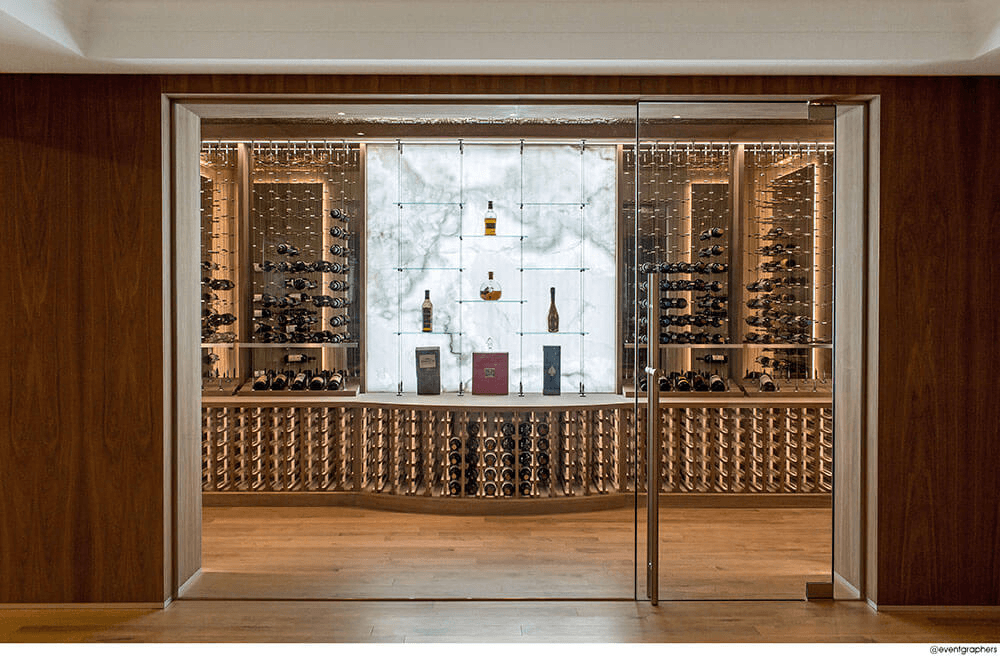
Cable Wine Systems offers tension sets in chrome and satin nickel finishes. The connecting clamps come in chrome only. Both finishes suit modern and contemporary interiors and hold up well over the long term.
Chrome is bright and reflective. It works well in spaces with polished hardware, stainless steel appliances, or high-contrast color palettes. It reads as sharp and deliberate.
Satin nickel is softer and warmer. It sits well in spaces with matte finishes, natural wood tones, or more subdued color choices. If your kitchen hardware is brushed or your home leans toward a transitional design style, satin nickel tends to integrate more naturally.
Either finish supports the floating effect that makes cable displays so visually distinctive. Because the cables are thin and the hardware minimal, the bottles appear to hover in space rather than sit on shelves. It gives the display a quality that traditional racking simply cannot replicate.
Beyond finish, you can add floating shelves, angled bottle displays, and accent LED lighting to the system. Each of these layers is added to the base cable design without changing the finish or the structural requirements. Browsing the Cable Wine Systems gallery before settling on a finish gives you a much better sense of the result than a spec sheet ever will.
Budget Considerations: What Does a Quality Wine Display Actually Cost?
Pricing is based on the height, width, and depth of your installation area at maximum spacing. The system is sold by the piece and assembled on-site, so you pay for exactly what your space requires.
Unlike off-the-shelf wine racks with a set price tag, cable wine systems are custom-built to your dimensions. The final cost reflects your ceiling height, total wall width, and how densely you want to pack the display.
One practical cost adjustment: widening the spacing between horizontal rows reduces the number of parts required. If you are working with a smaller collection or want to prioritize visibility over capacity, this brings the price down without changing the overall look.
Professional installation is also a line item to plan for. Cable Wine Systems strongly recommends it for all projects. The ceiling or top mounting point carries most of the load, and proper structural reinforcement (typically 2x4s secured between floor joists above the installation area) is needed to handle the combined weight of cables, clamps, and a full collection of bottles.
Lead times run from 3 to 12 weeks, depending on where you fall in the production cycle. Cable Wine Systems ships worldwide, so international buyers should factor shipping into their overall timeline. For a more accurate estimate before you commit, the team can provide a lead time when you request your quote.
When you are ready to get specific numbers, request a quote directly through the Cable Wine Systems contact page. The team responds within one to two business days.
DIY vs Professional Installation: What You Need to Know
Cable Wine Systems does not recommend self-installation. Because the ceiling or top mounting point carries most of the structural load, proper reinforcement is needed before any cable is tensioned. A professional installer protects both your system and your home.
The cables run under significant tension once the display is fully loaded. A single standard 750ml bottle weighs roughly 3 pounds. A wall holding 200 bottles adds up fast, and all of that weight pulls on the ceiling attachment points. Getting those anchor points wrong does not just put the bottles at risk. It can cause ceiling deformation or structural damage.
Cable Wine Systems is direct about this in their own guidelines: if you notice ceiling bowing or loose connections at any point after installation, remove the bottles immediately and contact a representative.
A trained installer knows how to assess your ceiling structure, install the necessary reinforcement, and tension the cables to the right specification. They also ensure the system meets any local building requirements for your space.
If you are working with an architect or interior designer on a larger wine wall project, the Cable Wine Systems guide to working with design professionals walks through exactly how those partnerships work. And for common questions before you reach out, the Cable Wine Systems FAQ page covers the most important ones in plain terms.
Why Cable Wine Systems Is the Right Choice for Home Wine Displays
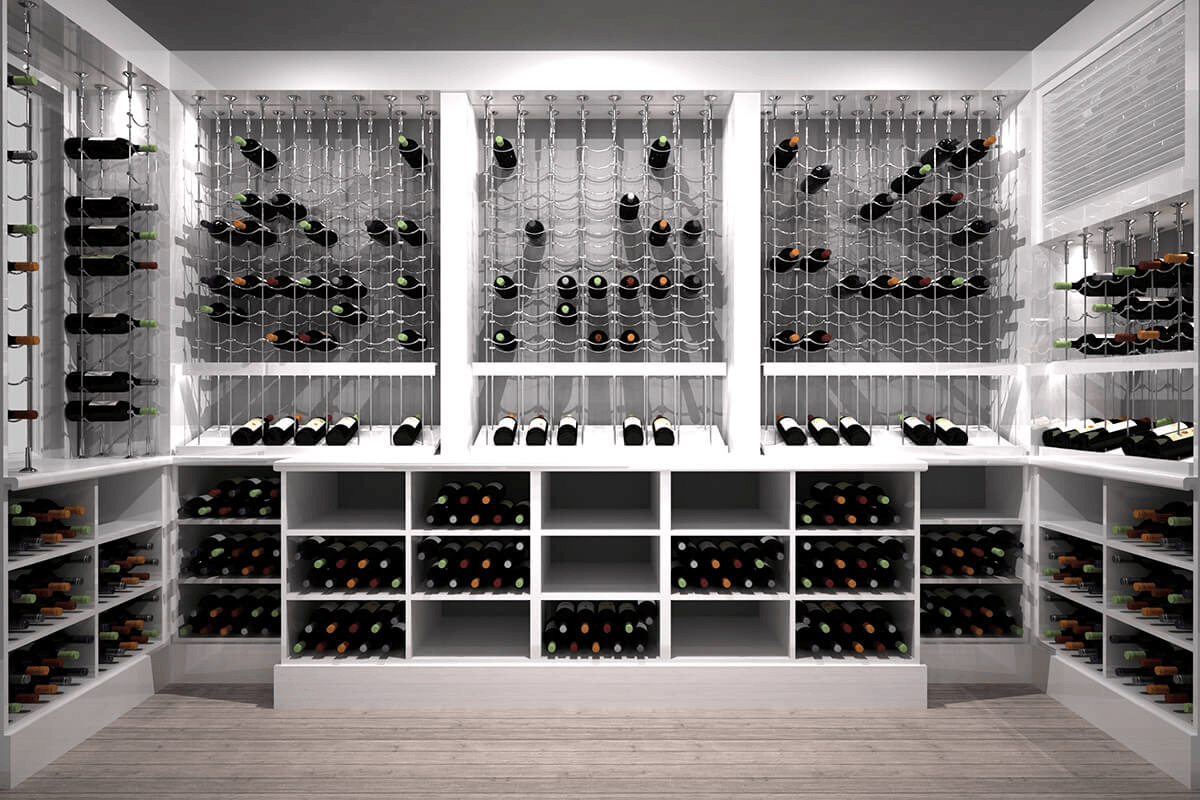
Cable Wine Systems offers one of the most versatile and visually striking wine display systems available, backed by quality materials, full customization, and responsive customer support from first inquiry through final installation.
The stainless steel cables and chromed brass hardware are not decorative choices. They are functional ones. The materials resist corrosion and hold up in the humidity conditions that wine storage demands. They do not warp, they do not degrade, and they support the full range of bottle sizes without modification.
The system scales from 10 to 10,000 bottles without changing its fundamental design. A boutique dining room display and a full cellar wall in a custom home use the same core components.
Bottles can be displayed neck-out (cork end forward) or label-view (labels facing out), depending on your preference. Label view makes identifying specific bottles fast and easy, which matters more than you might expect once the collection grows past 50 or 60 bottles. It also lets you show off the labels themselves, which, for serious collectors, is part of the whole experience.
The open cable design does something enclosed shelving and closed storage cannot: it keeps the entire collection visible at all times. Every bottle is part of the display. The system becomes a feature of the room, not just storage tucked away in it.
The Right Display Starts with the Right Questions
The best wine display for your home is the one built around your space, your collection, and your design preferences. Not a generic product that fits most situations adequately.
Start by measuring your space. Think about how many bottles you have now and how many you expect in the next few years. Consider how the display will work with the existing materials and finishes in the room. Then get a quote from someone who can tell you exactly what the build will look like.
Visit the Cable Wine Systems luxury racking page to explore what is possible before reaching out. When you are ready to move forward, the contact page is where the conversation begins.